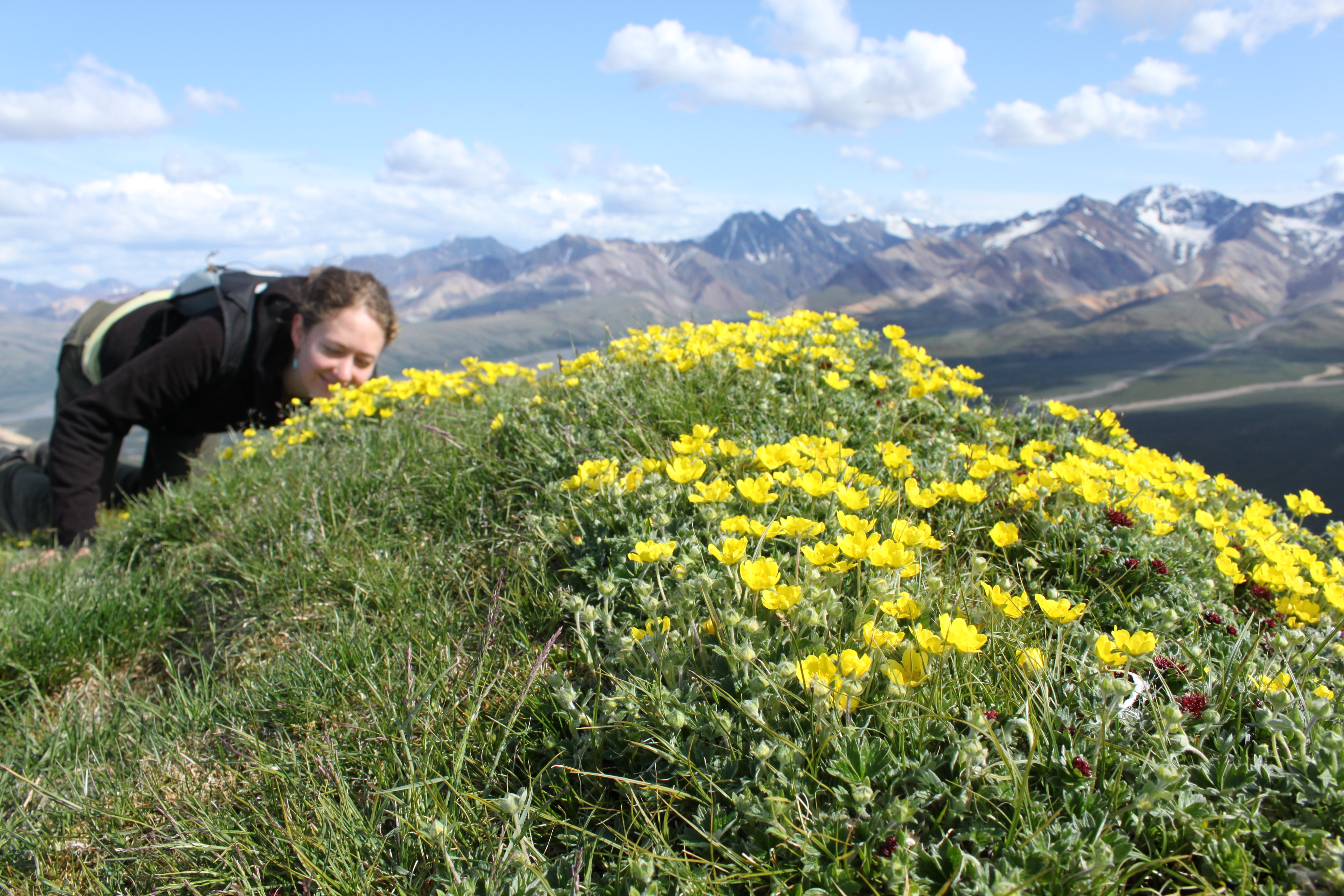
Alaska Snapshots

Even though I’m in Minnesota right now, I’ve still got Alaska on my mind. Here are some snapshots from the summer:


I sleep in late, then staOLYMPUS DIGITAL CAMERAgger to the outhouse through bright sunshine. Dogs raise a ruckus up the hill, and I pause on the porch. Movement through the aspen just above – a big moose. The dogs howl again, engines rev, and the moose clops down the road, gangly legs akimbo, before crashing off through the brush and into the pond with a splash.

 
Soup bubbles on the stove. Britta leans against the counter and gazes outside at the spruce trees. The dwarf birch bush at the corner of the cabin is illuminated with ripe summer eight o’clock sunshine, and its round shiny leaves seem to give off light, not just reflect it. Spider web silk transects leaves and limbs, light traveling its length in glancing ripples. Insects catch the light as they swarm.

dry cabinPhoto credit: Britta Baker


I spent a pleasant few minutes this afternoon burning used toilet paper in the old paint can in the outhouse. I worried about flames leaping from the can and licking at the old snags of black spruce, so I stayed and babysat the fire, side-stepping the thick curling smoke as it wound through my legs and poured into the aspen stand.  Though I now smell like sweet smoke and my eyes sting and burn, these are some of the few moments I can spend outside without mosquitoes swarming. Instead of their fleeting gray shadow-bodies, the light floating shadows of ash.


The night starts to get darkish by 12:45am. Still eerie dusky-white skies outside, but reflections grow in the windows and lamps are needed. Starting to get an idea of how quiet and spooky this cabin can be, as the cat stares out the window with an unblinking concentration, body tense. I peer out. All is blue shadow layered on gray, my reflection clearer than what is outside. A big moth flaps at the screen.

Dusk in denaliPhoto credit: Britta Baker


An evening layered in gray and white. Rain on my windshield, blackening the road in two tire stripes. A gulf of white off north and east as I drive to Healy. A gray owl flaps to a spruce, pinions and pinnacle.

Just off the phone with Lauren in DC. Behind her voice I heard the city – sirens, car horns, people, traffic. Movement and texture and color: a different world, so far away from my rain and owls, spruce and mountains. Outside, what I hear: the gritty sound of a car going up the gravel road. “Matzo! Matzo!” the girl calls her dog. A plane low in the sky. The roar of a four-wheeler. The rain has stopped, though the clouds are still white and wet-looking. Mostly I hear dense silence.

lousewortPhoto credit: Britta Baker


Midnight and we are drag-our-feet tired as we get out of Ol’ Blue and slam the doors. A white and brown spotted horse stands in front of the cabin across from us. “A horse!” we whisper to each other, delighted. One hoof is delicately raised as it looks at us through the dim gray light, ears forward. We pet its damp neck, its soft rippling nose. It feels sweet to lean into a large animal, warm skin, the solid weight, and feel it brace you.


Labrador tea and dwarf birch paint my bare legs with rain as I walk down the path to my cabin in the midnight July cloudy light. Eggs cupped in hand at this hour glow like the moon in the blue dusk.


Old guys in Rose’s Café wear camo jackets and baseball caps and button-downs.
“I don’t like living in Anchorage.”
“Stankorage,” chortles his pal.
They joke with the waitress, the only one I’ve seen when I come here. There is an ease, a long familiarity of people with the place that I like.


I hear a strange sound outside – a chirring, a high kikiki, distant cooing. Movement embedded in sound. It makes me restless and avid to see what is making the noise. I step into boots then go out on the porch and look up. Ragged lines of tiny black silhouettes, close enough to see wing beats, and the long outstretched necks. Hundreds of sandhill cranes passing overhead, skeins of bird yarn unraveling in the wind. My neck grows sore from craning.

OLYMPUS DIGITAL CAMERA

Scrape Ol’ Blue at 5:30am, then drive south to work. Stars hang like pendulums in the clear pre-dawn sky. The sky lightens incrementally, by degrees. The mountains are black, and a thick white bank of fog is suspended above the Nenana river, tracing its contours below the mountains.

Leave a comment

Filed under Alaska, Cooking, Denali National Park, Home, Nature, Seasonal Life, Snapshots

Tribute to the Sisterhood

I’m not a poet. I can’t rhyme worth a damn, nor can I stick to a meter. Disclaimers aside, I wrote this in the months following Britta’s departure from Alaska this summer and share it here for your amusement. Britta, perhaps you’d like to add some stanzas?

Tribute to the Sisterhood

We are the eaters of bread-butts, we are the soakers of beans.
We are canners and honey mead-makers, we add salt to our slow-boiling dreams.

We scoff at purveyors of bullshit, we are the rollers of eyes.
We skip when no-one is looking, we trip when we look at the skies.

We pause to identify flowers, we stoop to poke at the scat.
We piss off the sides of tall mountains, we shat at the glacial errat.

We are the laughers at mishaps, we have time for very few rants.
We are the clumsy beer-sloppers, we tear holes in the knees of our pants.

We are the front-row foot-stompers, we dance when the beat stirs our feet.
We are the wanton hip-shakers, without music we aren’t complete.

We wear earrings in the backcountry, we stand tall in high heels or big boots.
We have lived in all kinds of countries, we give credence to all of our roots.

We are the sketchers and schemers, we sit idle for hours at a time.
We sip on bourbon Jim Beamers, we pour glass after glass of red wine.

We thrive on wide-open vistas, we wilt when we feel we are trapped.
Our powers are strong and emerging; our lives have yet to be mapped.

Sisters 10

Leave a comment

Filed under Self, Sisters

New Essay

I wanted to share the link to my latest essay, published Monday in Terrain.org:

Google-Mapping a Syrian Childhood

And also to pique your interest, please keep checking back for a forthcoming post, Notes from a Dry Cabin. Said dry cabin doesn’t include internet, thus my absence from the blog this summer. This has been both refreshing – long lovely hours staring out at white spruce and quaking aspen and the gradually changing light – and frustrating. I feel cut off from many of you. So know that I am still alive and writing, and will update soon.

Leave a comment

Filed under Uncategorized

Transitions

I haven’t written in a while. It’s been months, in fact, months of upheaval and transition. When I wrote last, I lived in a small apartment in Missoula, Montana, was surrounded by an abundance of dear friends, and worked several part-time jobs, none of them enough to make ends meet. The last time I had a chance to think, the lilacs were heavy and purple in my backyard, and I stared at them from my yellow couch, which at the time sat on the porch before moving to a new home. The late spring sun soaked into me, and I let it roast my shoulders, imagining that this was all the summer I would get.

Since then, I have moved out of my apartment of five years, packed away most of my belongings, said too many goodbyes, drugged my cat, and driven 2,000 miles (cat in car) from Montana to interior Alaska. I don’t know when I will return to Montana. I drove north into winter, from flurries in Jasper the first night, up into the high mountains of British Columbia, to cold nights and frost heaves in the Yukon, and into a blizzard and two feet of snow in Denali. I have moved into a dry cabin, purchased my first car, and started two jobs. I have watched the snow recede from around my cabin into deep yellow puddles as the weather went from twenty degrees to seventy-five. From icy wind whistling through the cracks in our log cabin, we’ve seen an influx of mosquitoes and flies. In the last two weeks, the aspen have greened with sticky buds, and the puddles have soaked into the tundra, and flowers have exploded everywhere. On a hike recently, we found rich purple Pasque flowers – harbingers of spring! – wind flowers, rock jasmine, alp lily, the beginnings of Lapland diapensia, pink wooly lousewort, mountain avens, low-bush cranberry blooms. Even better than the flowers, though, more fitting with my mood, was a large mound of coyote scat, white with hair and chipped bones. I leaned over the scat and poked at it with a stick, touched the hard ivory fragments of bone.

Now I sit at my table and stare out at white spruce and my outhouse and green aspen. I sip wine and try to think about transitions. But there is something indigestible about the move I just made, something that sticks in my throat. I swallowed this move whole, both the parts that I needed, and the parts that claw me on the inside until I bleed. It is wrong to leave friends I love, friends who sustain and nurture me. It is impossible to turn my back on the low golden hills of Missoula, the towering cumulus clouds, the easy camaraderie of knowing a place well. I hug Alaska friends in greeting, but the goodbyes are still too fresh, and I tear up though I should be joyful. Oversized mosquitoes buzz my head at night and I curse their blood-lust, though my brief pain is their sustenance.

So here I am. Still reeling. Trying to figure out where I want and need to be.

2 Comments

Filed under Denali National Park, Home, Montana, Nature, Seasonal Life, Self, Uncategorized, Work

A Date with Myself

Today I went on a date with myself.

This meant I chose shoes to please only myself, and so ended up tromping down the river trail in hiking boots – practical, warm, sturdy. I noticed things for my own delight: the quick flit of a small dark bird across the path. The delicate tracery of frost on twigs and needles. The icy hurry of the river. I told myself several witty stories, just to impress, and did not try to think up clever things to say in return. I just listened, my attention completely focused on me.

At the bakery, I generously bought myself a cup of tea, and insisted on paying. “No, no, it’s on me,” I said to myself. I sat by myself at a table, chose the spot in the sun and basked, sipping my mint tea slowly and languorously. I used adverbs wantonly, experimentally, whimsically. I looked across the table at myself and imagined a future, searched for connections and similarities between me and myself. I kept an open mind, tried to overlook the awkward silences. I tried to forget what I knew about myself, and instead focused on how I made myself feel.

I in turn try to make myself feel comfortable. I slip in a few perceptive compliments, and instead of brushing them aside and not believing them, I respond with a simple “Thanks,” and glow a little.

Image

4 Comments

Filed under Self, Snapshots

Holy

This morning I went for a run up in the foothills of the Bitterroots above Hamilton, up toward Blodgett Canyon. It was a gray morning, with wet clouds hanging low over the mountains, and occasional droplets that misted against my face. Snow lined the road in slushy strips. I ran past paw prints, grouse tracks like little dinosaurs, and some sort of small pattering animal prints that skittered around on the shoulder before darting off into the woods. I saw bigger prints, obscured by melting snow. I imagined a mountain lion pacing along the road at dawn when the snow was fresh several days earlier. The jagged rock slabs of the canyon above me slid into the mist.

When I ran back toward my friends’ home, the neighbors were burning piles of brush beside the road. The flames leapt up at the sky and I caught a whiff of the smoke, sharp and pine sweet. All of a sudden, with that remarkable transporting mechanism that scent works on our brains, I was in Cairo, in a Coptic church, watching the priest walk up the aisle in his rounded hat, incense thick in the air. I was in the Church of the Holy Sepulchre in Jerusalem, I was in the tiny Palestinian Roman Catholic church in the village, and the priests walked through the high dim stone buildings, twirling incensors back and forth, walking through fragrant puffs of white smoke.

The wood smoke I ran through gave me a similar feeling, of being somewhere holy. But absent was the sense that I had to be proper, or exhibit the right amount of piety or reverence. Out there I could leap in the air like a leggy colt if the spirit moved me, and no one would care. Out there it was just me in my mismatched running clothes and the old guy in the rubber boots who tossed branches on the flames. The deer stood looking at me from the meadows, and I could feel the eyes of small animals and birds hidden away in the shrubs as I passed. The trees arched over the dirt road, creating an airy sanctuary. Small streams ran clear with a bright sound.

I didn’t feel the exclusion that I sometimes felt in human holy places, that I didn’t belong, that I didn’t understand the rites or the language or the belief behind each precise choreographed movement. Instead, I felt that in my limited human way, I could partake in this place. I felt a kinship with the man I saw moving through the latticed brushwork as he tended the fire. The careful way he tossed armfuls of branches into the flames. The quiet morning, the gentle crackle of twigs in the fire. This was his place, and he was a part of it, the wood smoke and the wild turkeys and the tangled undergrowth.

I ran on past him. The rain was on my face, the smoke perfumed my hair. I was just another animal leaving its tracks in the snow.

4 Comments

Filed under Montana, Nature, Work

Choppin’ Wood

Rain drips in syncopated streams from the roof of the wooden shed. Out in the yard, disconsolate donkeys stand in soft mud, large heads nosing towards the ground. They have thin brown stripes across their shoulders and down their backs, and their manes stand up like little red mohawks. Their ears are stiff folded velvet, and swivel to create a variety of expressions. Little Eeyores, Britta calls them. I love their dusty fawn gray hair and their patient thoughtful expressions as I scratch between their ears. I feel my heart open up and it is painful and sweet. I imagine a life with donkeys in it, their sweet affectionate presence in my yard, the way we’d go on walks together, the way they would come to meet me and recognize my smell. We’d have a special bond, these donkeys and I.

Perhaps I am guilty of a fairly typical romanticizing of rural life to which we urbanites are prone. The longing for connection to animals, to feel from them some kind of meaningful response to our presence. The idealization of life out here in the crisp air, picturing the smell of wood smoke and skipping over the blisters and sore shoulders that result from chopping wood.

I leave the damp chewed wooden fence, where the donkeys come to meet their admirers. They lift their lips and let out soft brays, watch our retreating forms with wet black eyes.

Back under the shed, Yvonne and Adam and Craig are chopping wood with mauls. A maul is a large heavy axe used for splitting wood. Lindsay has gathered several cords worth of rounds, and she has invited us over for a lumberjack party, to assist her in splitting the rounds into smaller burnable chunks of wood. This is her heat for the winter, which looms closer and closer. It snowed up here in Butler Creek last night, though it has since melted off, leaving muddy roads and cold wet grass, pocked with remnant lumps of snow.

I have a confession to make. I have never chopped wood before. In Montana, I feel that this admission is a major faux pas, which brands you indelibly and makes people look at you differently. As if your hands are as soft as a donkey’s nose. Like you don’t know how to take care of your basic needs. Which is fairly true, in my case.

I’ve lived in Alaska, summers, and have now been a denizen of Missoula for almost five years. I feel that Alaska and Montana give me some cred. I now go backcountry camping and can my own tomatoes, and have had bear encounters, and can identify some plants and birds. Though really, I’m still the same city girl that the Olsons took under their wing, many years ago when I was growing up in rural Minnesota.

“You’ve never been FISHING?” they asked in alarm, their Norwegian souls cringing at the thought.

So, they took me fishing. “Here, help row the boat,” they told me. I grabbed the oars and enthusiastically slapped them into the lake with a splash. The oars skipped over the surface of the water and the force of my pull made me fall backward off the seat, oars flying akimbo in the air. I can still see Gary’s face above me in the boat, reddened by sun and laughter, big shoulders shaking in silent paroxysms.

Not to be remiss about any part of my education, they also took me snowmobiling, bundling me up in old boots, slapping a helmet on my head, and schooling me in the important differences between Arctic Cats and Skidoos. “Don’t fall off,” they instructed after we climbed onto the sled. I would grip the waist of whichever Olson sat in front of me, they gunned the machine, and we zoomed away in a flurry of ice crystals. Did they hit the bumps on purpose to see if I’d fall off? To this day I’m not sure, but fall off I did, over and over, in a tumbled snow crusted heap. I would lay there and listen to the receding roar of the snowmobile as it circled around to pick me up, and look up at the glittering Minnesota night sky.

I could go on, about the time we shot clay pigeons, and eating shit-on-a-shingle, and the many other ways that the Olsons educated me. We both enjoyed our respective roles, I think: I as the ignorant yet enthusiastic novice, and they as the seasoned outdoors-people.

I think of the Olsons as I reach for the yellow handle of the maul. I eye the round of wood and imagine what advice they would offer. “Just don’t hit your foot.” Deep breath, raise the maul over my head (my lord is it heavy!) and swing it down toward the block. Where it dings feebly and chips a tiny quarter inch deep into wood. “Aim for the crack,” onlookers call helpfully. Aim? Ha! I heft the maul again and swing, trying not to picture an axe wound in my leg.

And miraculously find the crack! The round splits in two and falls off the block. I shout in triumph, and lean the maul against the block, wipe my brow, and reach for my whiskey, grateful that my comfort this winter does not depend on my skill with a maul.

3 Comments

Filed under Minnesota, Nature, Work

Of Rosehips, Scrumping, and Bear Shit

I wake up in a log house in the mountains, surrounded by aspen and ponderosa. After a leisurely morning of reading in companionable silence, sipping coffee and watching the wind harry the golden aspen leaves outside, some friends and I set off into the woods around the house. Above us tower the Bitterroot Mountains and Blodgett Canyon. Blocked by pines and just out of sight below stretches Hamilton, and across the valley the Sapphires are dusted with snow.

First we check on some century old half-wild apple trees, to see if there are any apples left for us. Nary a fruit is to be found, but I do step in an enormous pile of bear shit, orange-brown, with the appearance and texture of apple butter. It is late October, and the bears must be well into hyperphagia. I can’t begrudge them the apples.

For we human creatures, harvesting apples is a way to connect to our place, to make use of what grows here, and an excuse to be outside under blue skies and golden leaves. We are teetering on the edge of winter here, and for the bears the apples could mean survival. This land is managed by humans, but is so close to wilderness that it is more than half wild itself. Turkeys, deer, and of course bears wander through, drawn to the apples and birdfeeders, unaware of property lines.

This can be a problem in town. Missoula often has bears who stake out fruit trees in the Rattlesnake. They come for the apples and plums, but return for the garbage cans, lined up like tempting all-you-can-eat buffets along the alleys. I can’t really begrudge them this either. Just like us, they are trying to get by. However, bear-human interactions like these usually end badly for the bears.

A number of different groups in Missoula work to remove apples from trees, so that bears won’t be drawn into potential conflict. Earlier this fall, Britta and I went scrumping, a delightful word and practice. To scrump is to glean apples from trees. Glean, or steal. Permission is not always asked of the apple tree’s owner. Bears, then, are inveterate scrumpers. We, however, did ask permission before we stretched tarps under the weighted boughs, then scrambled into the tree to shake the limbs. Apples pattered to the ground, bouncing and rolling away as if they were trying to escape their destiny, which is to ferment in our closet and end up as hard apple cider.

Photo credit: Britta Baker

As I chased apples, the air perfumed with the sweet scent of bruised apples, I imagined that humans had probably been scrumping for thousands of years.  The technology hasn’t changed much over the centuries. We used about the same tools as our ancestors did: tarps and long “panking poles” to shake the hard to reach limbs. I thought about how the work we did resulted in something tangible and useful: jars of apple butter and jelly in rows on the shelf, bottles of hard cider in the fridge. My back twinged and my muscles after lifting heavy boxes of apples, but it felt like purposeful pain. I felt that my time had been worth something. The same is not always the case after a long day of writing or grading papers. My back is hunched and cramped, and I wonder if the students will even read the comments I labor over. I look out the window at the golden trees and blue sky and my soul hurts just a little before I turn back to the computer screen.

This morning, after checking the apple trees, we head across a meadow. No apples? Fine, we’ll try another harvest. We swish through long curled grasses, white and sere. Huge gauzy clouds drift across the bright sky, and sun heats our shoulders. I strip off my hat and vest but slip on my work gloves as we approach our destination, a massive overgrown rosebush that could rival Sleeping Beauty’s. Festooning the barbed branches are thousands of crimson rosehips, bobbing against the blue sky. It feels festive. We get to work.

As I pluck fruit from branches, I note the compressed grass around the rosebush, the neat piles of shiny brown pellets. I imagine warm bodies tucked under the rosebush at nights, the shelter this tangled tree offers. A thorn snags the soft skin on my wrist and I yelp. But the bright red rosehips pile up in the paper bag, and I picture steaming cups of tea while snow falls outside. Three rosehips have as much vitamin C as one whole orange. And roses grow wild on the mountains, nurtured by the Montana sun and rain.

We sit in the sun for a while after picking rosehips. I extricate stickers from my skin, examine the long red scratches across my knuckles and arms. They are a map of the day’s activities, along with the brown splotches on my boots. They show where I’ve been, what work I’ve done today.

Photo credit: Britta Baker

3 Comments

Filed under Nature, Work

Home #1 – Making Mahshi

Another series, this one about home.

Tonight, after a long day of grading geosciences essays, I wander into the kitchen and uncork a bottle of wine. The sun fades behind a lattice of trees outside the window. I pour wine into a small green glass and my headache starts to dissipate.

I rummage in the fridge and pull out eggplants and ground beef, then dip into the cupboard for some rice and spices. I slide a jar of tomatoes from the shelf and set all the ingredients on the counter together to admire. Mahshi time.

Mahshi is a traditional Middle Eastern dish that literally means “stuffed.” Which is approximately how you feel after you eat it. You can stuff almost anything; zucchini, tomatoes, potatoes, turnips, grape or cabbage leaves, or eggplants. I ate it often when I lived in Palestine. Tonight, I will stuff three slightly wrinkled eggplants purchased at last Saturday’s farmer’s market.

First, slice off the stems and heft the eggplant in your palm. Hollow out the insides with a good sharp scooping tool. Feel the weight of the shiny purple eggplant lighten as the pile of guts grows on the chopping board. Dip the empty eggplants into a bowl of salt water, then set aside.

Mix rice, ground beef, butter, turmeric, allspice, cinnamon, nutmeg, salt, pepper. Don’t pay attention to amounts. Tonight you are an Arab cook. Shake in just enough until it looks right. Roll up your sleeves and mix it together by hand. Let the hard grains of rice grit against your skin, feel the soft red beef give beneath your palm. The spices might temporarily overwhelm you with homesickness, but that is ok. Lean against the counter, close your eyes. Remember.

To be in a place is to touch it, to inhale and consume it. It becomes you. You become it. This is not an exaggeration.

Inside of you grow olive trees, back-lit by a hot sun. You contain shimmering blue Palestinian skies and dusty rutted roads. In your corners, you still find dust that settles on skin, on leaves, on tomatoes. The tunjara on the stove is full of mahshi, steam rising from its silver sides. Your dear friend stands by the stove in her flowered house-dress and slippers. She showed you how to shape the lozenges of rice and meat, how to poke them into the hollowed vegetables. Leave an inch of room for the rice to expand as it cooks. No matter how many times you cook mahshi, you will never get that practiced capable twist of your fingers that she was born with.

Lay the stuffed eggplants into a pot, and cover them with crushed tomatoes and water. Bring to a boil, then lower the heat to a gentle simmer. Lift the lid occasionally to poke the eggplants, and breathe in the aromas.

When the rice is cooked and the eggplant parts readily beneath a knife, serve heaping dishes to your loved ones. Sit together, jostle elbows as you cut into the mahshi, spilling rice into the tomato sauce. Breathe deep, take that first bite. Now. You are home.

4 Comments

Filed under Cooking, Home, Palestine

How to Say Goodbye

1.
You always know when to say goodbye, in Denali. When the aspen leaves turn to crisp gold coins and flutter on the sides of the road. When you watch the snowline sagging lower and lower on the mountains. When you can’t seem to shake that headache and you realize you are hung over, yet again. When your heart is weary from too much living. You bow out, make your exit as gracefully as you can, and head south.

Seasonal life comes with a set of parameters. You are here for one brief season. One season to absorb what you will, be it place, people, or alcohol. You live in this community of vagabonds and seekers, each drawn to this northern place by the promise of jobs or perhaps something more elusive. The spongy promise of tundra, the bite of glacial fed rivers, the sense that here, something is still whole. Maybe it’s you.

You come here as a kid in your twenties. Adult summer camp, you hear, and your ears perk up. A place to party, to drink with abandon, to dance around the solstice fire like a pagan, as cold rain baptizes you into something bigger.

You keep coming back, summer after summer, to work in the coffee house. You forgo a tan, stay winter white all year, because the place is magnetic. You start to feel a part of the community, recognizable, one of the returners. “She’s one of the coffee girls!” you hear on top of Mt Healy, and you secretly thrill. When you are pulled over on the park road for speeding, the ranger recognizes you too, and lets you off with a warning. “Slow down! You are here to see stuff, not just pass through,” she tells you.

You return each year to the same place, the airstrip with the tiny green cabins where you live. The coffee shop with the cool local vibe where you work. The cookshack where Wiley presides, cook and emperor and demigod. Where you drink with him by nights, and Sailor Jerry sets sail to a sea of prophecies and omens. Wiley is bawdy and irreverent, wicked and sweet. He turns up the music with a fierce flick of the remote. “Don’t Cha” throbs through the logs of the cookshack, and some nights, you can’t help but get up and dance. You feel it deep in your hips. Outside the spruce trees scratch with clawed fingers at the windows. Inside, you are home.

Night by night, it grows colder and darker. Paths you learned in the early summer light, you now have to trace by memory, by foot-feel, in the dark. Sometimes you trip and tangle in the spruce. You know that soon, it’s time to go.

2.
I am leaving tomorrow, but tonight I dance like this is it. Hair wild, rollicking into strangers and friends alike as the band plays under the yellow spotlights. The singer smiles at me; I make her lattes every day. Higher up, the stars spin. I orbit between here and there, not really anywhere.

Kantishna: the end of the road in Denali National Park. Literally. An old mining town, now inhabited by tourist companies and lodges. And home to the best damn music festival ever.

Earlier, we crowded into the Skyline lodge, pressed together hip to hip, Carhartts and fleeces, Sitka slippers stacked by the door next to hiking boots. Folk musicians charm us from the stage below; they have traveled from across Alaska to be here tonight.

The music twitches in my toes, taps in my fingers. I am surrounded by friends. And I’m leaving. I watch faces, I lean into shoulders, I memorize the profile of spruces out the window. I memorize the feel of wildness all around me.

And before I slip up the mud-slick road to the tent, under black spruce silhouettes, under the possibility of aurora, I am drawn to a circle of glowing faces. A large white paper sphere is lit on fire and gently let go to drift up into the night. It is illuminated, it eats itself alive and sheds sparks as it fades into night. It lights the way for us as we leave.

3.
Leaving a place you love is a kind of death. It changes while you’re gone in ways you can’t imagine or want.

Wiley died last weekend, flipped us all one last bird and left us behind. I remember his skin warm against mine as we sat in the cookshack holding hands. I remember his voice as he sang in the bathroom. I remember him sleeping in the armchair by the door.

Wiley, I hope it’s better than we can imagine. I hope you are without pain. I hope you know how much we love you. Goodbye.

Wiley, by Wendi Sims Schupbach

11 Comments

Filed under Grief, Nature, Seasonal Life